Paleoclimate Constraints on Future Climate: A Graduate Student Reflection on the 2025 PCC Summer Institute
Has paleoclimate genuinely changed our understanding of modern day climate?
With an animated pre-Summer Institute paper discussion this past August, my PhD journey at UW began.
Starting graduate school with an immersion in current thinking on paleoclimate via three days spent at Friday Harbor Laboratories attending the Summer Institute felt fitting. After all, I came to UW motivated to understand the future trajectory of the West Antarctic Ice Sheet (WAIS) – the largest source of uncertainty in future sea level rise projections. I soon realized, however, that formulating a definitive anthropogenic attribution statement, or stating with confidence that present melt is due to human cause, requires situating a modern day melt signal in a far broader historical context, one that exceeds the present instrumental record.
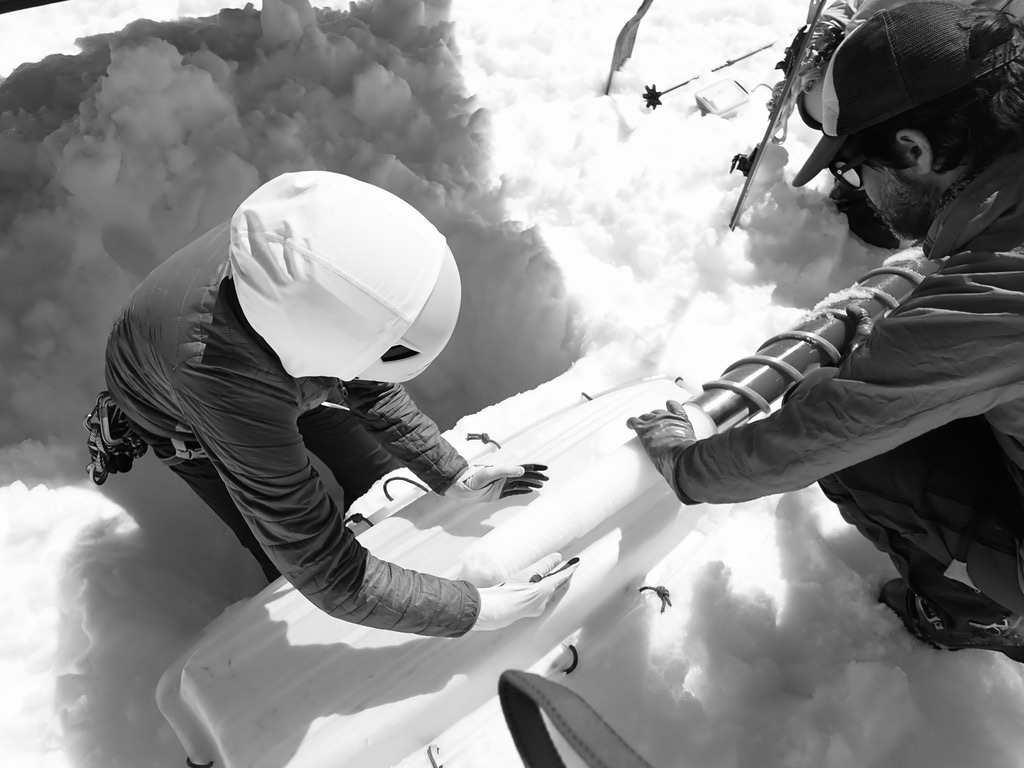
I was first introduced to one such method for extending our record of climatological understanding when I spent a summer approximately 1000 miles north of Seattle on the Juneau Icefield. Holding my first ice core, I came to appreciate how we can reconstruct historical temperature and CO2 concentrations, via oxygen isotope ratios and preserved air bubbles, even for time periods during which we didn’t directly bear instrumental witness. That summer in Alaska, when thinking about the cumulative mass loss the Juneau Icefield was experiencing, I was first introduced to Gerard Roe’s work attributing industrial glacier mass loss to human forcing.
And now here I was at the Summer Institute, listening to Gerard Roe’s talk on “Bridging preindustrial and modern climates with mountain glaciers” and beginning to piece together how an anthropogenic attribution framework that applies to mountain glaciers, whose melt is driven by summer air temperature, might apply to the West Antarctic Ice Sheet, where melt is driven by a complex interplay of atmospheric and oceanic forcing.
Through Greg Hakim’s introductory talk explaining paleoclimate data assimilation using a coin flip analogy, as well as informal conversations with older graduate students, I began to understand how climate models and high-resolution proxy records could be integrated to improve the resolution of global climate reconstructions.
Talks by Gemma O’Connor and Mira Berdahl (another full circle moment as Mira has long been a role model of mine after she first introduced me to principles of sea level prediction based on the Community Ice Sheet Model while I was a Juneau Icefield Research Program student) helped me begin to crystallize my initial PhD research focus: how can we leverage paleoclimate proxy data to reconstruct the atmospheric forcing suspected to drive ice shelf retreat via ocean warming?
Informal conversations during car rides, in the dining hall, while bioluminescence-searching via rowboat and orca-hunting via foot along the coast, allowed me to ask questions: How much trust can we place in paleoclimate reconstructions? What are the statistical demands of an anthropogenic attribution assessment? Is caution in order when using paleoclimate to draw conclusions about modern-day climate sensitivity?
In particular, the Summer Institute presented me with a unique opportunity to build connections across departments and schools, including the Climate Impacts Group and the Evans School. We talked about the importance of accurately quantifying – and communicating – uncertainty when forecasting future climate. I grew excited thinking about how better understanding of past climate states is valuable both as a scientific pursuit in its own right and as a means to enable more sound climate adaptation and mitigation.
The Summer Institute ignited an interest in paleoclimate which I’ve continued to carry forward as a first year PhD student in Earth and Space Sciences and as a Graubard Fellow, funded by Katherine Graubard and William Calvin. Through a course in Paleoclimatology taught by Eric Steig, and a paper reading group on “abrupt changes in the paleoclimate record” led by Kyle Armour, I’ve continued to think about how paleoclimate can inform future climate understanding. Through my involvement with the PCC Graduate Student Committee and Climate Journal Club, I’ve continued to seek out interdisciplinary community across academic divisions, in large part inspired by relationships I began to build at the Summer Institute.
Reflecting back on that original question posed pre Summer Institute in August, I can now answer with growing certainty that paleoclimate has fundamentally shaped what we know about modern climate – as a constraint, an imperfect analog, and a reminder of the mechanisms by which our climate can respond to forcing.
And with even more certainty, I can say that I’ve joined a community invested in deepening that understanding collectively.
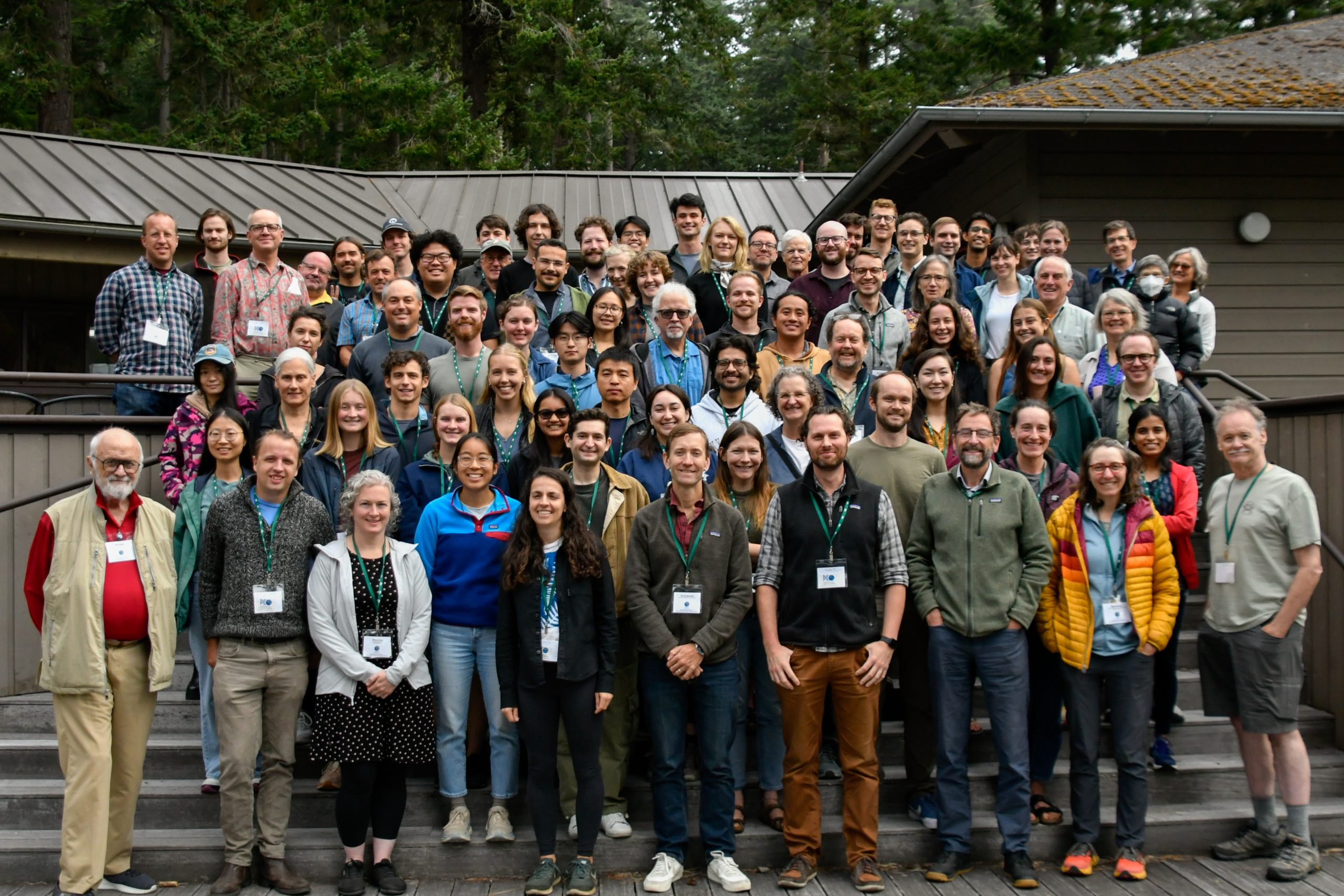
Written by Sophia Ludtke, Graduate Student, University of Washington Earth and Space Sciences